Sunday, 3 September 2017

A Sustainable Culture of Child Safety; Filling in the Holes of the Swiss Cheese

This is an active response to a Catholic Education Melbourne workshop Child Safe Standards: Next Steps on the Journey presented at the Catholic Leadership Centre August 2017.

Key note speaker, Professor Daryl Higgins, Institute of Childhood Protection Studies, Australian Catholic University, stressed the importance of having multiple practices in place to ensure a Child Safe school. Higgins described the context of an organisation as having holes like those in Swiss cheese. The more layers of cheese we can provide, the less holes. Just as steering wheel locks were a visible deterrent to car thieves before car security improved, we need to send a strong, visible message that we promote and reinforce a Child Safe School.


The new Child Safe Standards through Ministerial Order No 870 became mandatory on the 1 August 2016. On 15 November 2016, further legislation was passed in Victoria providing the Commission for Children and Young People, powers to oversee and enforce compliance with the Child Safe standards by relevant organisations. 
Here is a link to an excellent VRQA 2 minute video summarising the processes so far

St Pat's and every other school in Victoria introduced a new Child Safety Policy and Code of Conduct in Term 4, 2016. The introduction of the standards, coincided with the beginning of my tenure as principal in Melbourne. Having now completed ten years as a primary school principal, I believe that the challenge to support the community to adjust to the necessary and ongoing changes to the school culture in relation to the ministerial order have been my greatest yet.


To comply with the Child Safe Standards, we have made a number of necessary changes to existing practices. Some of these have included the introduction of an Alcohol Consumption Policy in relation to school community events. This has meant a change to expectations around pizza nights, discos, working bees and our school fete. The Child Safe Code of Conduct is now visible on the visitor sign in ipad, including the importance of wearing lanyards and the registering of Working With Children Checks. Parents are expected to report to the office to pass on messages and pick up children instead of freely wandering through the school.

Catholic Commission Education Victoria 1 minute Child Safe Video 

The move from an informal and trusting environment to formalised visitor expectations has been a challenge for some of our parents. Changes in the way the school community has traditionally held events has been another challenge. As principal, I understand the enormous change of culture needed to comply with this legislation. It is our responsibility as leaders to educate our children, staff and our community to move beyond compliance to deeply embedding a sustained child safety culture. There are still many holes in the cheese. As we continually review our practices, we invite parents and children to be part of a newly established Child Safe Team. This will help to fill in the holes and engender much needed ownership and understanding about the need for change within our community.

On the 1 July 2017, the Children Legislation Amendment (Reportable Conduct) Act 2017 (Vic.), has been passed by the Victorian parliament, preparing the way for the introduction of a Victorian Reportable Conduct Scheme (Scheme). All of this legislation means further reviews of our practice. Ultimately, the message is that it must become the norm for Child Safety to be on every meeting agenda and part of every staff, parent and Parish discussion.

                           
Next steps for our community:
  • Draw attention to Child Safe procedures with children, staff and parents during National Child Protection Week 3-9 September
  • Ensure the Child Safe Policy and other documents are visible on our website, newsblog and learning site
  • Initiate a Child Safe Team including teachers, parents and children
  • Work with the Student Representative Council to develop a child friendly Child Safe Code of Conduct and give our children a voice around Child Safety
  • Include Child Safety on the agenda of all meetings - staff, board and parents
  • Review camp and excursion Safety Action Plans
  • Use the CEM Embedding a Culture of Child Safety Reflection Tool with the community
Protecting the well being and sacred dignity of every child has been and still is an ongoing job for each and every member of our community. We invite all of you to be play your part in keeping our children safe. Together we can continually add layer upon layer of cheese to fill in the holes and create safe environments where every child can thrive and flourish.




Friday, 18 August 2017

Restorative Practices - "Open our minds and hearts..." one parent's reflection

When I created this change2flourish blog, the intent was to create a forum for authors to collaborate and share first hand experiences of change (learn more).

My challenge has been to find contributors willing to share their experiences. That is until now. I sincerely wish to thank Kate Cherfi, one of our school parents, for sharing an honest reflection about change in her family as an outcome of a Restorative Practice evening at school.


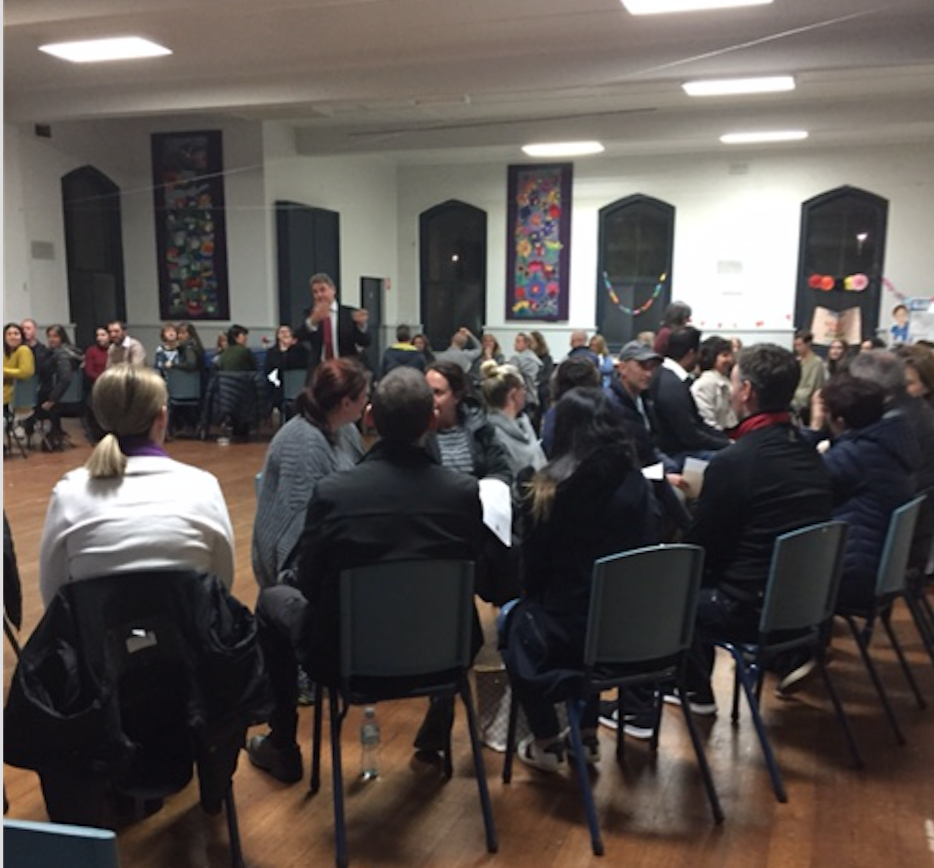
At the end of an enlightening Restorative Practice evening in the school hall, I stood up to thank the internationally renowned presenter, David Vinegrad. I explained that I had taken copious notes and asked if anyone else had done the same. One lone hand went up out of about one hundred parent and teachers.

I am thrilled to be able to share with you a very personal reflection from the other person who bravely admitted to taking notes - Kate Cherfi. Kate attended the evening with her husband Adrian. Kate and Adrian have two daughters at St Patrick's School, Ada in Year 3 and Willow in Year 2.

Here is Kate's reflection:

I think as a parent we need to be taught the right way to be the perfect role models for younger generations. Growing up I grew up with dismissive parents who led me to believe that this was the only way to discipline. How wrong I was to think and act this way. I too had taken their approach on board and its only done more harm than good. I was left powerless.

After hearing David's approach its just so easy to apply because he’s reminding us of what has been missing all along. Family values and respect for one another.

I LOVE his point about shifting the focus from the wrongdoers and promoting empathy for both parties. This is key. I had to use his approach with Ayda yesterday and it worked beautifully and given this was a new approach from me in the end she asked for a cuddle and looked me in the eye and said, “thanks for sitting down with me and talking about it mum”. I feel empowered as a parent and as a woman and I do hope that my kids will grow up using the same approach.

Every night now we play True or False. Two truths and one lie. I didn’t like using the word lie so changed it to false. The kids love it and it gives me an opportunity to make a new story up each night. Lol..There’s a big kid within!!

So in a nutshell I think it was amazing having David speak and helping us adults open our minds and hearts again, and showing us the way.

Kate Cherfi


Relationships, relationships and relationships
Here is a summary of the evening for those of you who attended or for those of you who were unable to come along and want to learn more about Restorative Practices. You can access the slideshow at this link. One word to sum up the powerful message from the evening was "relationships". David stressed that the 3 R's central to quality parenting are - relationships, relationships and relationships.

Within two minutes of our Student Wellbeing Leader Angela Yates introducing David, we were asked to move our chairs and sit in two large circles, an inner and an outer one. There was much laughter as we had to introduce ourselves to the person sitting opposite and answer questions. Before we knew it, David's chime sounded out and we had to move seats and talk with another person. In those brief conversations, we made new connections and shared insights into out fears, hopes and dreams for our children. At the same time we were building relationships and connections with those around us.
When David asked parents what sort of attributes they wanted their children to have when they left St Patrick's some of the responses were: compassion, honesty, resilience, empathy. Interestingly enough, being a star mathematician or a the best writer didn't feature. Aligning school values with family values will enable children to be supported to flourish.

Restorative Practices is the whole school approach that underpins the Pastoral Care and Behavioural Support programme at St Patrick's. It is guided by Catholic Education Melbourne's policies focused on student well being and building resilience.
As David explained, restorative practice is about managing behaviours through a relationship lens. It is about separating the behaviour from the child and restoring relationships to be respectful and productive. It is about moving away from a blame and shame model to genuinely understanding the harm and repairing the relationship. 

Restorative Practice is about enabling children to be confident enough to own their behaviours and understand boundaries, limits and expectations. It is about a balance between being firm and fair. It is understanding that being sorry means more than just saying the words, but it means a change in behaviour.
Have a W.A.R.R.M. Conversation
David uses the acronym "warm" to describe a restorative conversation. This is something that parents can talk through with children at home. Research supports that encouraging children to articulate their behaviours and feelings improves oral language skills whilst building resilience and self-esteem 
What happened ? (what, which, when, who, where, how?)
Affect (who has been affected and in what ways?)
Reflection (if you had your time over again what would be different?)
Repair (what needs to happen to fix things ?)
Moving on - (make plans and agreements for prevention and behaviour change)

Empower our children and build resilience
David spoke of the importance in letting the children learn to speak about their concerns with their teachers and friends. Sometimes, parents want to take matters into their own hands and solve their children's problems. We must encourage our children to learn to speak up at school to help solve problems instead of relying on parents emailing concerns on behalf of the children.

When you see your child at the end of the day you can ask "What was the best part of your day at school ?" Avoid asking "How was your day?" or "What didn't go well today ?" Focus on the positive and ask open ended questions that require more than a yes or no answer.

As Kate mentioned, play the "two truths and one false game" with your children. Spend quality time talking together. Open your minds and hearts to your children and to each other.